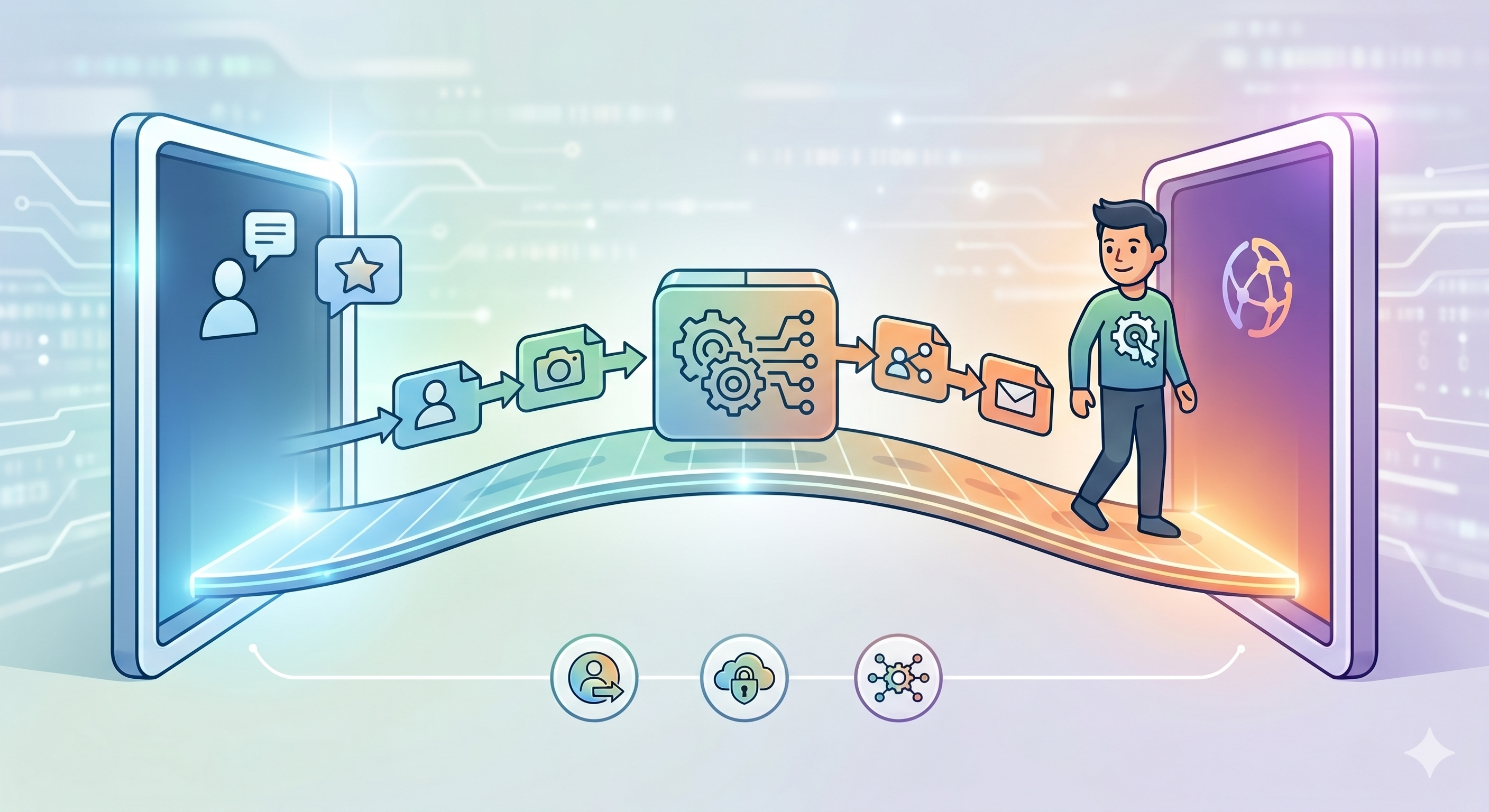
Expanding AI capabilities for everyone with the Model Context Protocol
How should we connect AI to the services we use? Model Context Protocol is a great answer.

Data portability is a right on paper — but exercising it requires software that different organizations can adopt, standards that allow those implementations to interoperate, and schemas that define what the data actually looks like when it moves. DTI builds and stewards all three.
When the technical plumbing of portability is open and shared, the entire ecosystem thrives — from startups to major platforms.
Without shared implementations, every organization must build portability from scratch. Open source code, open standards, and open schemas create a common foundation that reduces duplication and accelerates adoption across the ecosystem.
Open infrastructure allows a small startup to participate on equal footing. When the technical foundations of portability are open and shared, the barrier to genuine competition is lower for everyone.
Platforms that develop portability tooling in isolation — or share it only under restrictive terms — turn a public benefit into a private advantage. Open infrastructure ensures portability remains accessible to all.
When the technical foundations of portability are open and shared, a small startup can begin to participate. Open source, open standards, and open schemas lower the barrier to genuine competition.
Platforms that develop portability tooling in isolation — or that share it only under restrictive terms — turn a public benefit into a private advantage.
These scenarios show why open source, standards, and schemas matter for real-world data portability.
Do you have contacts on your iPhone and also in an email service? Without standard requirements, companies use export formats that cannot avoid duplication. Your friend "Clona Lisa" ends up duplicated on both services — and the more times you sync, the more she gets cloned.
Photo albums and large media collections online are more complicated than they appear. Asking companies to implement album portability requires each pair of companies to spend months debugging edge cases of unusual size, format, and metadata. When each integration is this expensive, user choice is limited.
A user who has spent months building a conversation history with one AI assistant — preferences, context, prior work — should be able to bring that when they try a new service. DTI's AI Conversation Schema defines a standard format for this export, so the data is portable and readable, not locked inside a proprietary log.
With shared implementations, open standards, and standard data formats, major platforms holding our personal data could empower data donation for research into countless topics in health, sociology, and technology.
DTP is an open source project, created in 2018 as an industry collaboration, that uses services' existing APIs and authorization mechanisms to move data directly between platforms. Over a dozen services are connected today. DTI stewards the project and continues to grow it.
DTI has developed a specification for AI conversation data exports, defining a structured, interoperable format covering messages, context, and metadata. The schema is published openly and is designed to make it possible to switch AI services without losing the history you've built.
Pardner is an open source prototype data donation platform. A research center running Pardner could allow research participants to donate their personal data directly from the services where that data lives — automating the transfer while keeping users in control.
Shared schemas and open source code solve the "how" of portability — but the technical specifications that define data formats and transfer protocols need a home too. DTI participates in open standards processes to ensure portability requirements are represented where technical decisions get made.

At DTI, we’ve been spending some time working on how we can use data portability as a tool for researchers studying technology and its impact.
Read Full PostHow should we connect AI to the services we use? Model Context Protocol is a great answer.
The Internet Engineering Task Force continues to shape the core of technology protocols, and thus, data transfers.
The Fediverse lacks true account portability. A few specifics need to be worked out; the LOLA specification in W3C is...
A move from client-server to Web access made portability harder. That is why we at DTI are working on it....